A job goes live. Fifty CVs land in an inbox. Nobody reads them for a week. The hiring manager asks for an update, and HR can’t say who’s good. By the time someone calls the best candidate, that person has already said yes somewhere else.
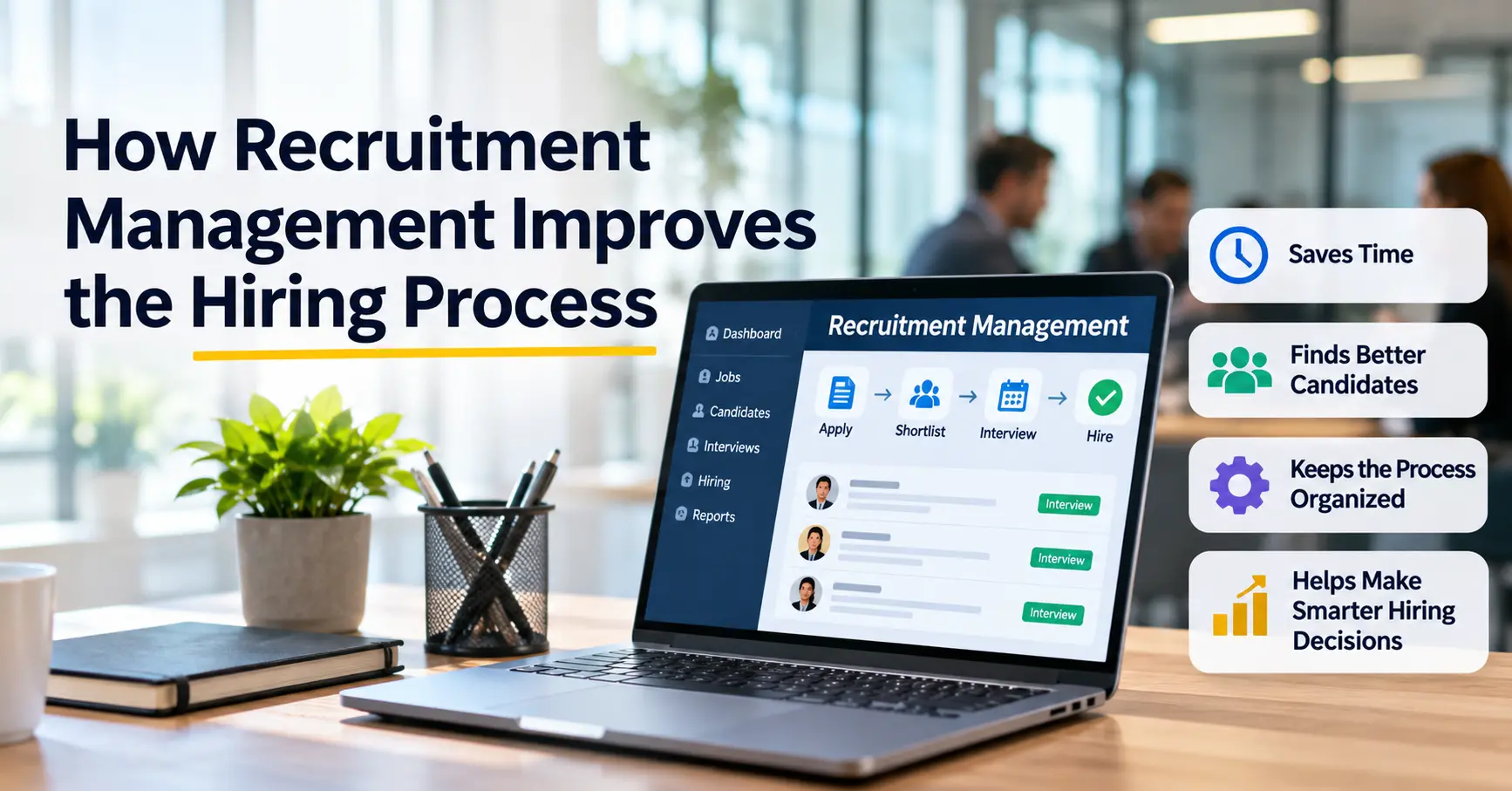
That’s how good people get lost. And it’s rarely because anyone is lazy. The work just isn’t organized. This is what recruitment management improves in the hiring process: it puts the work in order. Connect HRMS helps teams do that. Here’s what recruitment management is, what it fixes, and how you can get better at it.
1. What is recruitment management?
It’s how you plan and run hiring. Posting the job, finding people, screening applications, interviewing, picking someone. All of it. It also makes sure HR and the hiring manager aren’t guessing who does what.
Keep one thing straight. Recruitment management is the whole recruitment process. Recruitment software is a tool that helps with it. The tool can hold candidate details in one place and do some jobs automatically. But the process comes first. Buy software without a process, and you just get a messy process on a screen.
2. How does recruitment management improve the hiring process?
This is the big one. Here’s what gets better when hiring is organized.
Reduces time-to-hire
Slow hiring loses good people. It’s that simple. An organized process cuts the waiting. Repeat screening and admin jobs can be automated. Interview scheduling stops being a chain of “does Tuesday work?” emails. And the team can see which stage each application is in, so nobody sits on a CV for days.
Improves quality of hire
Good hires don’t come from luck. They come from asking everyone the same questions and scoring them the same way. That’s what structured interviews and candidate scorecards are for. You compare people against what the job really needs. Decisions get more consistent, and you can explain why you picked someone.
Improves communication and collaboration
HR and hiring managers can both see where each candidate is. No more chasing for feedback. No more “who has this CV?” Everyone knows what they own.
Creates a better candidate experience
Candidates hate silence. Even a short update helps. So does easy scheduling, and so does telling them what comes next. It matters more than people think. A good experience helps your employer branding, and candidates talk, even the ones who don’t get the job.
Supports fairer hiring decisions
When everyone’s judged on the same criteria, you focus on skills and qualifications. It’s harder to go with a gut feeling. One warning, though. Automated screening needs a human watching. These tools can miss good people, and they can carry bias. A person should always check the results.

3. The role of recruitment management software
Software doesn’t hire anyone. It takes away the boring work so people can focus on the human part. A recruitment management system can:
- Keep profiles and applications in one place
- Track people through each stage
- Send selected emails and reminders, and book interviews
- Let hiring managers read feedback in one spot
- Save records for future roles
An applicant tracking system for recruitment, or ATS, is one of the main tools. It organizes the applications and follows each candidate from the first CV to the final offer.
Want to see how this works for your team? Call Connect HRMS on +971 457 13703 or email info@connecthrms.com, and we’ll show you.
4. Recruitment management vs. traditional hiring
| Feature | Traditional hiring | Structured recruitment management |
| Application tracking | May rely on spreadsheets and emails | Can use a centralized candidate database |
| Candidate screening | Often requires more manual review | Can apply predefined criteria and automation |
| Interview scheduling | Back-and-forth communication | May offer automated scheduling |
| Team collaboration | Updates may be spread across different channels | Shared recruitment pipeline and feedback |
| Candidate communication | Depends on manual follow-up | Automated updates can support timely communication |
| Reporting | Manual data collection may be needed | Reports can help track recruitment performance |
To be fair, the old way can work. If you hire two or three people a year, a spreadsheet is fine. Things get hard when you hire often, or for many roles at once. That’s when a structured process starts saving real time, and when recruitment process optimization pays off.
5. How recruitment management helps build a talent pipeline
Every job brings in people who don’t get it. Some were really good. Most companies forget them.
A talent pipeline fixes that. You keep organized records of past applicants. Next time a similar role opens, you already have names. Reaching out again is easy, and you don’t start from zero. It also helps with planning hires further ahead.
Some platforms include candidate relationship management (CRM) for this. It’s a feature that helps you stay in touch with people you may want later.
6. How to improve your recruitment management process
You don’t need to change everything at once. Here are some practical ways to improve the hiring process:
- Write down what the job needs before you advertise it.
- Use the same screening and interview criteria for everyone.
- Give HR and hiring managers clear roles.
- Keep candidates updated.
- Watch numbers like time-to-hire and how many candidates move to the next stage.
- Use software only where it fixes a real problem.
- Look at your hiring results, and improve things over time.
The benefits of recruitment management software show up fastest when the process underneath is already clear. Software can’t fix a messy process on its own. And if you want to try recruitment automation software, start with one job, like scheduling, and see if it helps.
FAQs
What is recruitment management?
It’s how a company plans, organizes, and runs its hiring. It covers posting jobs, screening, interviewing, and selecting people.
How does recruitment management improve the hiring process?
It makes hiring faster, more consistent, and easier to track. Teams share one process, and candidates get clearer updates.
What is the difference between recruitment management and an ATS?
Recruitment management is the whole process. An applicant tracking system is a tool that helps run it by tracking applications and candidates.
How does recruitment management reduce time-to-hire?
It cuts manual work, simplifies interview scheduling, and shows where each candidate stands. Decisions don’t wait around.
Can recruitment software improve candidate experience?
Yes. Quick updates and easy scheduling help candidates feel informed. It works best when a real person is still involved.
Does recruitment automation remove bias?
No, not by itself. Automated tools can still carry bias, so a person should review the results.
Do small businesses need recruitment management software?
Not always. For a few hires, a simple process and a spreadsheet can be enough. Software helps more as hiring grows.
How do you build a talent pipeline?
Keep records of past applicants and stay in touch with the good ones. Use them when new roles open. Some recruitment platforms have a CRM feature for this.
Conclusion
Recruitment management brings order to hiring. You cut delays, make better decisions, keep candidates informed, and build a list of good people for later. The process matters most. Software only supports it.
Start small. Define the job, use the same criteria for everyone, and track your numbers. Then add tools where they actually help.
Want help improving your hiring? Contact Connect HRMS on +971 457 13703 or info@connecthrms.com, and we’ll help you get started.